Chronicle your company's heart and soul. Create a book that encapsulates your company's history and workplace culture.
MarkingsCommunityCollaborationDiversityReflection
“For just as the body is one and has many members, and all the members of the body, though many, are one body, so it is with Christ. For in one Spirit we were all baptized into one body—Jews or Greeks, slaves or free—and all were made to drink of one Spirit. For the body does not consist of one member but of many. If the foot should say, ‘Because I am not a hand, I do not belong to the body,’ that would not make it any less a part of the body. And if the ear should say, ‘Because I am not an eye, I do not belong to the body,’ that would not make it any less a part of the body. If the whole body were an eye, where would be the sense of hearing? If the whole body were an ear, where would be the sense of smell? But as it is, God arranged the members in the body, each one of them, as he chose. If all were a single member, where would the body be? As it is, there are many parts, yet one body. The eye cannot say to the hand, ‘I have no need of you,’ nor again the head to the feet, ‘I have no need of you.’ On the contrary, the parts of the body that seem to be weaker are indispensable, and on those parts of the body that we think less honorable we bestow the greater honor, and our unpresentable parts are treated with greater modesty, which our more presentable parts do not require. But God has so composed the body, giving greater honor to the part that lacked it, that there may be no division in the body, but that the members may have the same care for one another. If one member suffers, all suffer together; if one member is honored, all rejoice together. Now you are the body of Christ and individually members of it.”
1 Corinthians 12:12–27
From the card
Getting Started
Gather Stories: Collect anecdotes, values, and moments that represent your company's journey and ethos.
Involve the Team: Encourage contributions from all levels to reflect a multifaceted company culture.
Choose a Format: Decide whether your culture book will be a physical copy, a digital version, or both.
Design with Identity: Ensure the book's design resonates with your company's branding and aesthetic.
Distribute and Discuss: Share the culture book with employees, new hires, and stakeholders, using it as a touchstone for conversations about your collective identity.
Tips for Success
Update the culture book annually to include new milestones and narratives.
Create a shared place on your company network to share artifacts easily.
Incorporate the culture book as part of the onboarding process to help new team members learn about the company.
This guide provides detailed steps on creating a culture book, including gathering stories, defining organizational structure, and designing the book to reflect your brand’s ideals. It emphasizes the importance of storytelling and visual elements to make the culture book engaging and representative of your company’s ethos.
Zappos' 2019 culture book is a classic example of a company documenting its values, traditions, and employee stories in their own words. Note that it is a large PDF (about 49 MB) of the 2019 edition, so it may load slowly. A CEO can page through it for ideas on format and voice before building a culture book of their own.
The HubSpot Culture Code is a public slide deck that sets out what the company values and how it expects people to work together. HubSpot revises it over time, most recently in September 2025. It gives a CEO a current, real-world model of a culture book that is kept alive by regular updates rather than written once.
Chuck Swindoll draws on Joshua 4, where Israel stacked stones from the Jordan so that later generations would ask what they meant. He calls readers to go to the trouble of creating lasting markers of God's faithfulness and to keep telling the story. It gives a CEO the spiritual reason for a culture book: recording what God has done in the company so newer employees can learn it.
The Culture Code by Daniel Coyle studies highly successful groups and how they build safety, share vulnerability and establish purpose. The section on purpose shows how leaders use repeated stories and simple phrases to tie daily work to a larger mission. A CEO can read it before gathering stories, to decide which narratives belong in the company's culture book.
StoryCorps, the national oral history nonprofit, offers free lists of interview questions sorted by theme, including sets on work and on friends and colleagues. Teams can pair long-tenured and newer employees, record short interviews with these prompts and pull quotes and moments for the culture book. It makes the story-gathering step practical for people at every level.
·
Helpful?
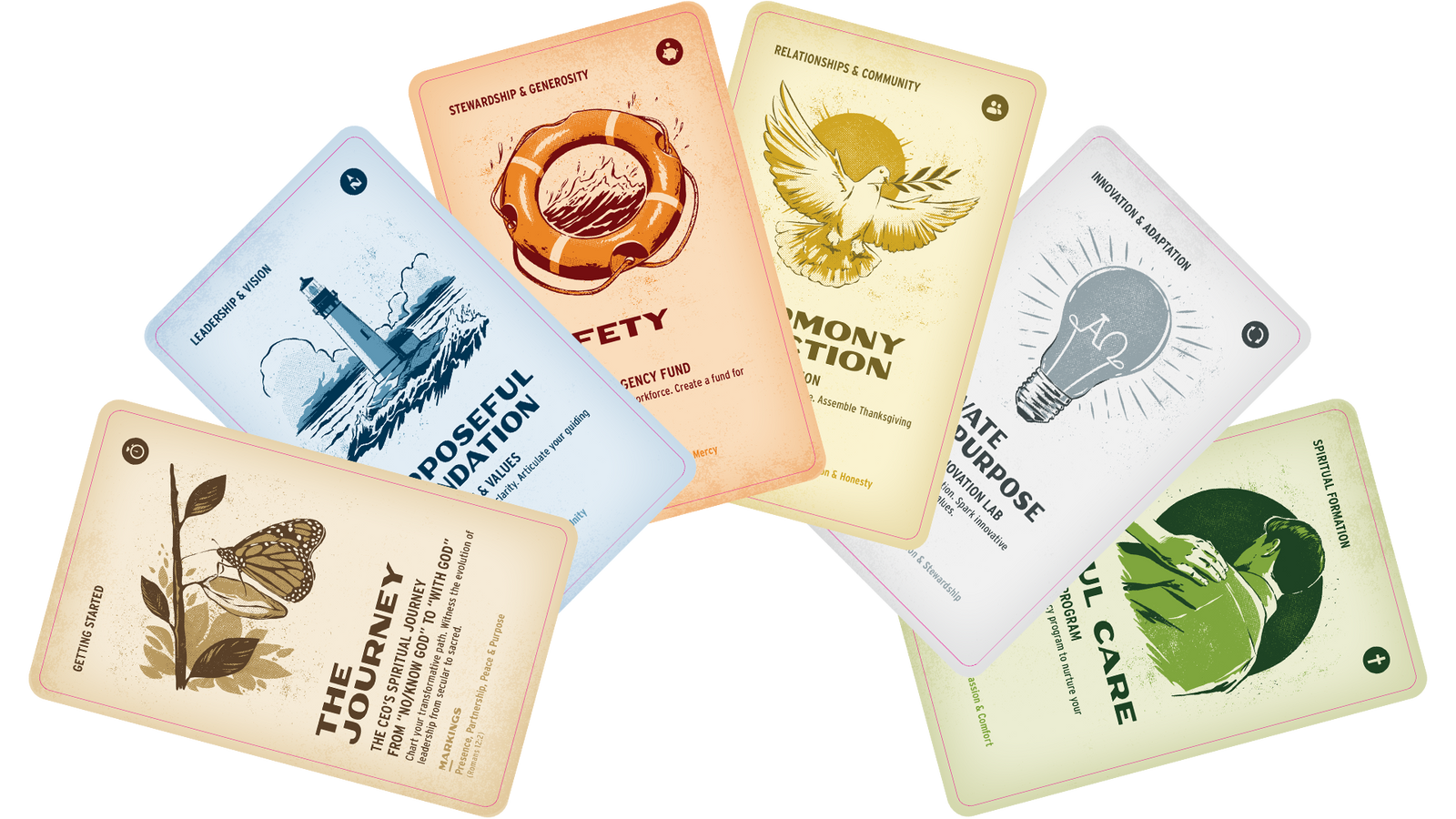
This is 1 of 52 strategies in the Kingdom Culture Field Guide.
Suggest it. If it makes the cut, you’re entered in this month’s drawing for a $50 Amazon.com Gift Card, and if we add it to the card, you get the credit.